
Anup Roy and Krishna Kant on the challenges the public sector banks face in revitalising themselves

Banks play 'mind games' to woo customers. Big data and 'games' are now the tools of the trade.

Can the Bajaj-Triumph tie up overtake the beloved Royal Enfield?

The freebies are now over, but Jio will need to notch up subscriber numbers and margins to prove its sceptics wrong.

Customers won't shift to electric cars until there is countrywide infrastructure for charging stations, which should be as spread out as petrol pumps now. Two, the price of the lithium ion battery, which constitutes 30 to 40 per cent of the cost of an electric car, has to fall substantially, so that the vehicle is as affordable as a gasoline one.
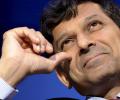
'The RBI risks becoming dangerously weakened, as successive governments and finance ministers have misunderstood its role'.

The failure of big-budget Bollywood movies show that mega stars such as Salman Khan, Shah Rukh Khan, Hrithik Roshan, Ranbir Kapoor, Katrina Kaif and Anushka Sharma are struggling to impress the audience.

As households age, they pile up debt, a peculiarity unique to Indians, a Financial Stability and Development Council report has found. Here are the key takeaways.

According to a legal expert, the clause of 'reasonable restriction' could still mean the government can make Aadhaar mandatory for monetary transactions and therefore, for banking.
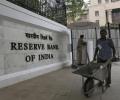
With the introduction of new notes, India will have denominations of Rs 1, 2, 5, 10, 20, 50, 100, 200, 500 and 2000.

RBI ex-governor's book on 'those turbulent but exciting times' to be launched on Sept 5 in Chennai.

McDonald's problems couldn't have surfaced at a worse time. Cut-throat competition, rapid expansion and a slowdown in consumer spending in the wake of demonetisation have seriously dented the overall quick-service restaurant business.

Samsung makes the largest number of non-4G feature phones in India

The region constituted more than 31percent of the segment's total sales volume in 2016.

Green bonds refer to bonds issued mainly by power companies to finance energy efficient projects

Recent incidents suggest these safeguards perform well in simulated conditions and mock drills, but often fall short when actual threats emerge.

Is India really one of the cheapest nations to live in?

As many as 26 of 50 urban hubs across the country have shown a moderate upturn in housing prices between December 2016 and March 2017


As on June 16, currency in circulation was Rs 15.29 lakh cr, or 86.2% of pre-note ban level
